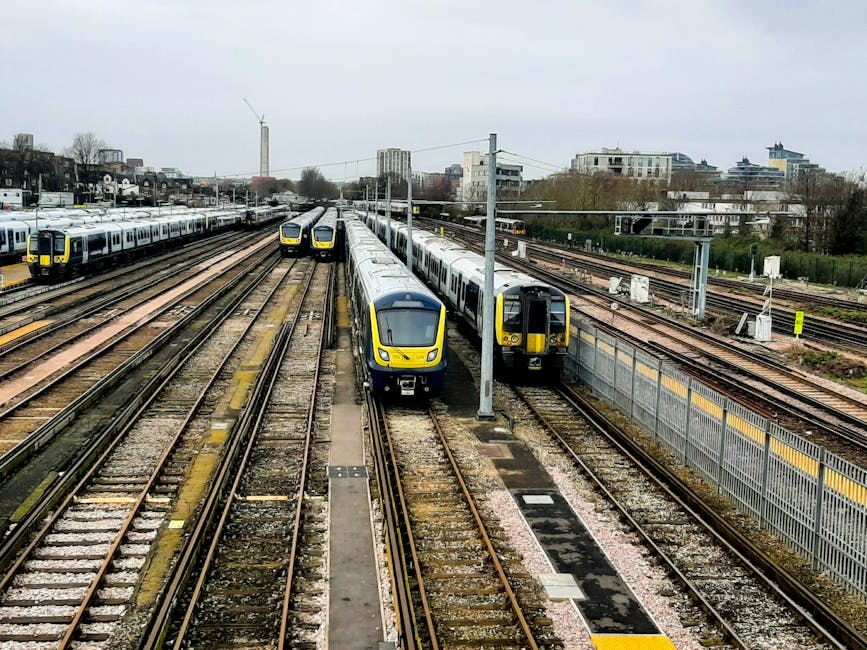
Best rubbish collection routes near Raynes Park station
If you are trying to work out the best rubbish collection routes near Raynes Park station, you are probably juggling a few things at once: a tight schedule, a pile of unwanted items, and the simple desire to get the job done without blocking the road or wasting time. That is fair enough. Around a busy station, the difference between a smooth pickup and a stressful one can be surprisingly small - one awkward turning, one poorly timed arrival, and the whole day feels heavier.
This guide looks at how to plan the most sensible collection routes near Raynes Park station, what makes a route efficient, who benefits most, and how to avoid the usual bottlenecks. It also covers practical decision-making, compliance basics, and the small local details that tend to matter more than people expect. If you want the route choice to feel calm rather than chaotic, start here.
Why Best rubbish collection routes near Raynes Park station Matters
Route planning is not just a logistics problem. Near a station, it affects timing, traffic flow, neighbour relations, worker safety, and whether the collection can be completed without drama. In a station area, you often have mixed traffic patterns: commuters arriving and leaving, delivery vans stopping briefly, taxis, pedestrians cutting across side roads, and the usual London uncertainty that makes everyone a little impatient. That is the backdrop.
Choosing the best route helps you reduce delays, avoid repeated lifting, and keep waste movements predictable. For households, it can mean less time with bags or bulky items sitting out front. For landlords, letting agents, and businesses, it can mean less disruption to staff and customers. And for anyone disposing of awkward items, it usually means one thing: fewer chances for a collection to go sideways.
There is also a trust element here. When a clearance team explains how they will approach the job, you get a better sense of whether they understand the area or are just guessing. To be fair, a route that looks fine on paper can still be awkward in practice if access is tight, parking is limited, or loading has to happen in a narrow window. That is why local awareness matters so much.
If your clear-out includes mixed household waste, furniture, or a larger volume of general rubbish, it may help to look at the broader waste removal service alongside the route itself. The route gets the waste away efficiently; the service type determines how the job is handled on site.
How Best rubbish collection routes near Raynes Park station Works
In simple terms, a good rubbish collection route is the path that lets the crew reach the property, load items safely, and exit with as little interruption as possible. That sounds obvious, but the best route is rarely the shortest route. It is the route that works best for the vehicle, the loading point, the time of day, and the type of waste being collected.
Near Raynes Park station, route choice usually comes down to a few practical questions:
- Can the vehicle approach without getting trapped by congestion or parked cars?
- Is there enough space to stop legally and safely?
- Will the crew need to carry items a long distance from the property to the vehicle?
- Is there a better side street, access point, or collection window?
- Are there bulky items, fragile items, or specialist waste that need separate handling?
A strong route plan often starts before the team arrives. The client confirms what is being collected, where it is located, and whether there are access issues such as narrow stairs, shared entrances, controlled parking, or basement storage. If a property is a flat above a shop, for example, the best route might be the one that avoids the busiest front road and uses a quieter side approach, even if that means a slightly longer drive.
The practical side matters just as much as the driving side. A collection route is really a combined plan: travel route, parking point, loading path, and disposal destination. When those four pieces fit together, everything feels smoother. When they do not, you get delays, extra handling, and, frankly, annoyed people all round.
For people clearing larger quantities from a home or estate, a service like house clearance can be especially useful because the route plan can be matched to the volume and layout of the property. The same goes for a smaller flat move where stairs, lift access, or shared entry points can make a simple job more complex than it looks.
Key Benefits and Practical Advantages
A well-planned rubbish collection route near Raynes Park station offers more than speed. In many cases, the real win is predictability. You know when the vehicle will arrive, how the loading will happen, and what the team needs from you. That reduces stress. Which, let's face it, is half the battle on a rubbish day.
- Less disruption: the crew can work around commuter traffic, school runs, and delivery peaks.
- Faster loading: sensible parking and access planning cuts wasted steps.
- Better safety: fewer unnecessary carries and fewer risky manoeuvres near pedestrians.
- Cleaner finish: the route can be planned to avoid dragging waste through awkward shared spaces.
- Lower chance of a second visit: when the collection plan matches the property layout, fewer items get missed.
There is also a sustainability angle. An efficient route reduces unnecessary miles and helps a collection team group jobs sensibly. That is not a magic fix, and it should not be oversold, but it does contribute to better overall resource use. If sustainability matters to you - and more people are asking about it now - you may want to read the company's approach to recycling and sustainability.
A local route strategy also helps when you are dealing with mixed items. For example, furniture, appliances, and general rubbish may need different handling once loaded. In those cases, services such as furniture disposal or fridge and appliance removal can fit neatly into the route plan, rather than being treated as an afterthought.
Who This Is For and When It Makes Sense
This topic matters to a wider group than people sometimes think. It is not only for households with a van-load of clutter. Around a station, the same route issues crop up for landlords, office managers, shop owners, tradespeople, and anyone trying to clear waste without causing awkwardness on the pavement.
It tends to make sense if you are:
- clearing a flat close to the station with limited parking;
- moving out and need a same-day or timed collection;
- managing a shop, office, or small business with recurring waste;
- dealing with renovation debris after light building work;
- emptying a loft, garage, shed, or storage area;
- trying to remove bulky items without relying on a skip.
If you are in a shared building, the route question becomes even more important. Some collections work better when the crew enters from one side street and leaves via another. Others are easier when the waste is placed in advance near the most practical exit point. That can sound overly detailed, but it saves time. And time, around a station, is always the thing you run out of first.
For businesses in particular, route planning can support more orderly collections during quieter periods. A company looking for regular support may want to review business waste removal alongside one-off clearances, especially where bins, stock, packaging, or office clutter build up over time.
Step-by-Step Guidance
If you want the collection route to work well, keep the planning process simple and specific. Here is a practical way to approach it.
- List the waste types. Separate general rubbish, furniture, garden waste, electrical items, building debris, and anything possibly restricted.
- Check access points. Note the front door, side gate, rear alley, communal entrance, lift access, stair width, and parking constraints.
- Choose the easiest loading point. Do not assume the obvious front entrance is best. Sometimes a side access point is much better.
- Estimate volume honestly. A half-filled room can still produce a surprising amount of waste once everything is bagged or stacked.
- Identify timing constraints. If you need to avoid commuter peaks near the station, say so early.
- Flag specialist items. Appliances, mattresses, confidential paperwork, and potentially hazardous materials may need separate handling.
- Confirm disposal preferences. If you care about recycling or reuse, ask how those items will be processed.
In our experience, the biggest improvement comes from step two. People often describe the waste perfectly but forget the access. Then on the day, the team arrives and discovers a shared stairwell, a locked gate, or a parking bay that is not usable at that hour. Small thing, big effect.
If the route includes a lot of stairs, tight corners, or a first-floor flat with no lift, it may be worth looking at a flat clearance solution rather than treating it like a simple kerbside collection. The layout changes the whole job.
When you are ready to book, a straightforward online booking route can help you organise timing without back-and-forth. If that suits you, see book online.
Expert Tips for Better Results
Good route planning is often about tiny adjustments rather than big dramatic changes. Here are the details that usually make the difference.
- Avoid peak congestion where possible. A collection arriving a little earlier or later can sometimes save more time than taking the "main" road.
- Place items close to the most efficient exit. If it is safe and practical, moving waste nearer to the loading point beforehand helps.
- Group items by type. This speeds up sorting and can reduce handling confusion.
- Use clear labels if there are multiple waste streams. Useful for offices, shared buildings, and trade clearances.
- Ask about recycling first. Not every item will be recyclable, but separating what can be reused or recovered is always worth doing.
- Keep hallways clear. It sounds obvious, but it really does make loading safer and quicker.
A slightly overlooked tip: if you have large awkward items such as wardrobes, sofas, or heavy shelving, mention the item dimensions or at least the "does it come apart?" question. That one question can prevent a lot of head-scratching at the doorstep. Honestly, it saves more than it sounds like it should.
For larger furniture jobs, consider whether mattress and sofa disposal or furniture clearance is a better fit than a standard rubbish pickup. The route and handling plan can then match the actual job, not just the label.
Common Mistakes to Avoid
Most collection problems are not dramatic. They are mundane, and that is exactly why they repeat. Here are the mistakes that trip people up again and again.
- Assuming the nearest road is the best access route. Sometimes it is busier, narrower, or harder to stop on.
- Underestimating volume. One garage clear-out can turn into far more bags and bulky waste than expected.
- Forgetting about parking restrictions. A route that looks fine at 10 a.m. may be impractical at 8:30 a.m.
- Mixing restricted items into general waste. This can create delays or require the load to be split later.
- Not telling the crew about stairs or long carries. It is better to be blunt up front.
- Leaving sorting until collection day. That is when everyone is rushed, and things get missed.
There is also a bit of a human mistake here: people sometimes plan for the collection they wish they had, not the one they actually need. A garage full of old boxes, broken shelves, a fridge, and a couple of garden bags is not the same as a few bin bags. Different route logic, different handling, different timing.
If your job involves building materials or renovation leftovers, a dedicated builders waste clearance option may be more sensible than treating it as general rubbish. That is especially true if the route needs to be coordinated with workers, materials deliveries, or a fixed deadline.
Tools, Resources and Recommendations
You do not need fancy software to plan a decent collection route, but a few simple tools can make life easier.
- A clear site note: jot down access points, gate codes, parking limits, and floor level.
- Photos of the waste: useful when you want to show size, quantity, and awkward items.
- A rough room-by-room list: especially helpful for lofts, garages, and office clearances.
- A timing window: note whether the collection must happen before school traffic, after lunch, or outside commuter peaks.
- A disposal priority list: separate must-go items from "if there is space" items.
As a recommendation, start with the practical service page that best matches the job, not just the waste type. For example, a cluttered office near the station is usually better matched to office clearance, while a home reset may fit home clearance. These choices can shape how the route, labour, and loading are organised.
If you have a stored-up loft or attic job, a loft clearance can be more efficient than trying to break the work into smaller unrelated collections. One route, one plan, less faff.
Law, Compliance, Standards and Best Practice
Any rubbish collection near a station should be planned with legal and practical duties in mind, even when the job looks straightforward. In the UK, waste must be handled responsibly, and it is wise to check that the collection provider follows proper environmental and safety procedures. You do not need to become a compliance expert overnight, but you should expect the basics to be taken seriously.
Best practice usually includes:
- careful handling of waste to reduce spillages and manual handling risks;
- clear separation of any items that may require specialist treatment;
- respect for access, parking, and neighbouring properties;
- appropriate disposal or recovery routes for collected waste;
- transparent communication about what can and cannot be taken.
If your items include something potentially risky, such as chemicals, paints, or other unusual materials, that needs extra caution. A service like hazardous waste disposal exists for a reason. Do not assume all waste can be bundled together. That is how problems begin.
Security and safety matter too. If a provider explains how it protects customers, staff, and property, that is a good sign. You can look at insurance and safety and the company's health and safety policy to understand the approach more clearly. Likewise, if paperwork, records, or personal files are involved, confidential shredding is the sensible route.
For pricing and customer expectations, it is also reasonable to review pricing and quotes and the terms and conditions before committing. Not because you need to study every line like a solicitor, but because clarity saves headaches. A small paragraph now beats a long email chain later.
Options, Methods, and Comparison
There is more than one way to clear rubbish near Raynes Park station. The right route depends on volume, access, and urgency. Here is a simple comparison to help you think it through.
| Method | Best for | Strengths | Limitations |
|---|---|---|---|
| Timed waste collection route | Busy streets, flats, office clearances | Flexible, efficient, less disruption | Needs good access planning |
| Bulky item clearance | Sofas, beds, appliances | Handles awkward items well | May need careful lifting and route planning |
| Full property clearance | Homes, lofts, garages, probate-type clear-outs | Covers more waste in one visit | Can take longer on site |
| Builders waste clearance | Renovation debris, DIY waste | Good for mixed heavy waste | Requires clear waste description |
| Skip-based approach | Longer projects with space available | Useful for ongoing work | Needs suitable parking and permits where relevant |
If you are unsure which method fits, the key question is usually this: do you need the waste gone from inside the property, or is roadside removal enough? That one answer often narrows things down fast.
For some jobs, the better option is not a route question at all but a method question. For example, if you are comparing a skip against a same-day load-up service, it is worth checking what can go in a skip before deciding. Sometimes that clarity prevents the wrong booking entirely.
Case Study or Real-World Example
Picture a straightforward but slightly messy scenario. A resident near Raynes Park station is moving out of a first-floor flat. There is an old mattress, a broken desk, mixed bags of household waste, and a couple of small appliances. The street is not impossible, but parking is tight in the morning, and the building shares an entrance with neighbouring flats.
The first plan seems simple: pull up outside, load everything, leave. In practice, that would be awkward. The better approach is to schedule the collection for a quieter window, use the side access where possible, and stage the items closer to the exit before the team arrives. The route to the building matters, but so does the route inside it - from room to hallway to vehicle.
That sort of job usually goes smoother when the service is matched properly from the start. A collection that involves several larger items may combine furniture handling with household waste, and that makes planning more important than people expect. One resident we spoke to informally described the relief of seeing the waste gone in a single visit rather than having to split it over multiple lifts. Not glamorous. Very practical though.
In similar situations, a targeted service such as flat clearance can save time because the route and loading plan are designed for shared access, stairs, and compact urban layouts. It is the kind of detail that feels minor until you are the one carrying a table through a narrow landing at 7:45 in the morning.
Practical Checklist
Use this quick checklist before collection day. It keeps the job tidy and reduces surprises.
- Confirm exactly what needs to be collected.
- Separate general rubbish from furniture, appliances, and special items.
- Check the best access point near the station-side property or building.
- Note parking restrictions and time windows.
- Move items to an accessible, safe location if you can do so easily.
- Identify anything hazardous or restricted.
- Take photos of large or awkward items if needed.
- Ask about recycling and reuse handling.
- Keep hallways, stairs, and exits clear.
- Have payment, booking, and contact details ready.
Quick expert summary: the best route is the one that reduces friction. That means less carrying, fewer delays, safer parking, and a clearer loading plan. If you get those parts right, the collection feels almost boring. Which, in this line of work, is a compliment.
Conclusion
Finding the best rubbish collection routes near Raynes Park station is really about making a busy local job feel simple and controlled. The shortest route is not always the smartest one. The smartest route is the one that fits access, timing, waste type, and the realities of a station area where people are moving fast and space is tight.
If you remember only one thing, make it this: plan the route around the collection, not the other way round. That small shift usually saves time, reduces stress, and gives you a much better result. And if you are dealing with larger household items, office clutter, or awkward waste from a clear-out, a service that understands local access can make all the difference.
Get a free quote today and see how much you can save.
When the job is handled well, it leaves more than a clear space. It leaves a lighter feeling for the rest of the day. That matters more than people admit.
Frequently Asked Questions
What is the best rubbish collection route near Raynes Park station?
The best route is usually the one that gives the collection team the easiest safe access, avoids peak congestion, and matches the type of waste being removed. In practice, that may mean a side street, a quieter time window, or a loading point that reduces carrying distance.
Why does route choice matter so much near a station?
Station areas tend to have more traffic, more pedestrian movement, and less forgiving parking. A poor route can lead to delays, blocked access, or extra handling. A good route keeps the job calm and efficient.
Do I need to sort my rubbish before collection?
It helps a lot. Sorting general waste, furniture, appliances, and any special items makes planning easier and can speed up loading. You do not need to make it perfect, but basic separation is worth doing.
Can a rubbish collection team handle bulky items near Raynes Park station?
Yes, usually they can, provided access is suitable and the item type is confirmed in advance. Large items like sofas, mattresses, and wardrobes often need a more deliberate route and loading plan than bagged rubbish.
What should I tell the collection team before they arrive?
Tell them what needs removing, where it is located, whether there are stairs or lifts, and any parking or access restrictions. If anything is awkward or unusually heavy, say so early. It saves everyone time.
Is a skip always better than a collection route?
Not always. A skip can suit longer projects, but it needs space and sometimes extra permissions or careful parking planning. For many homes and flats near the station, a direct collection is simpler and less disruptive.
How do I know if I need flat clearance instead of standard rubbish removal?
If waste is inside a flat, especially on upper floors or in a shared building, flat clearance is often more practical. It accounts for stairs, lifts, shared entrances, and the way waste must be moved through the property.
What happens if I have furniture and general rubbish together?
That is very common. A good provider can plan for mixed loads, but it helps to list the furniture separately from loose rubbish. That way the team can handle both efficiently without missing anything.
Are there items that need special handling?
Yes. Fridges, some appliances, chemicals, paint, and other unusual materials may need specialist treatment. If you are unsure, ask before collection day rather than guessing. It is safer and usually quicker in the long run.
How can I make the collection go faster?
Keep access clear, place items close to the exit if possible, give accurate details up front, and choose a sensible time window. Small steps like these can make a surprisingly big difference.
Should businesses near Raynes Park station plan rubbish collections differently?
Usually yes. Businesses often need quieter timing, clearer access instructions, and regular scheduling. Office waste, packaging, and clearance work can build up quickly, so a more structured route plan is often worth it.
Where can I learn more about pricing, safety, or recycling?
Useful starting points are pricing and quotes, insurance and safety, and recycling and sustainability. They help set expectations before you book.